
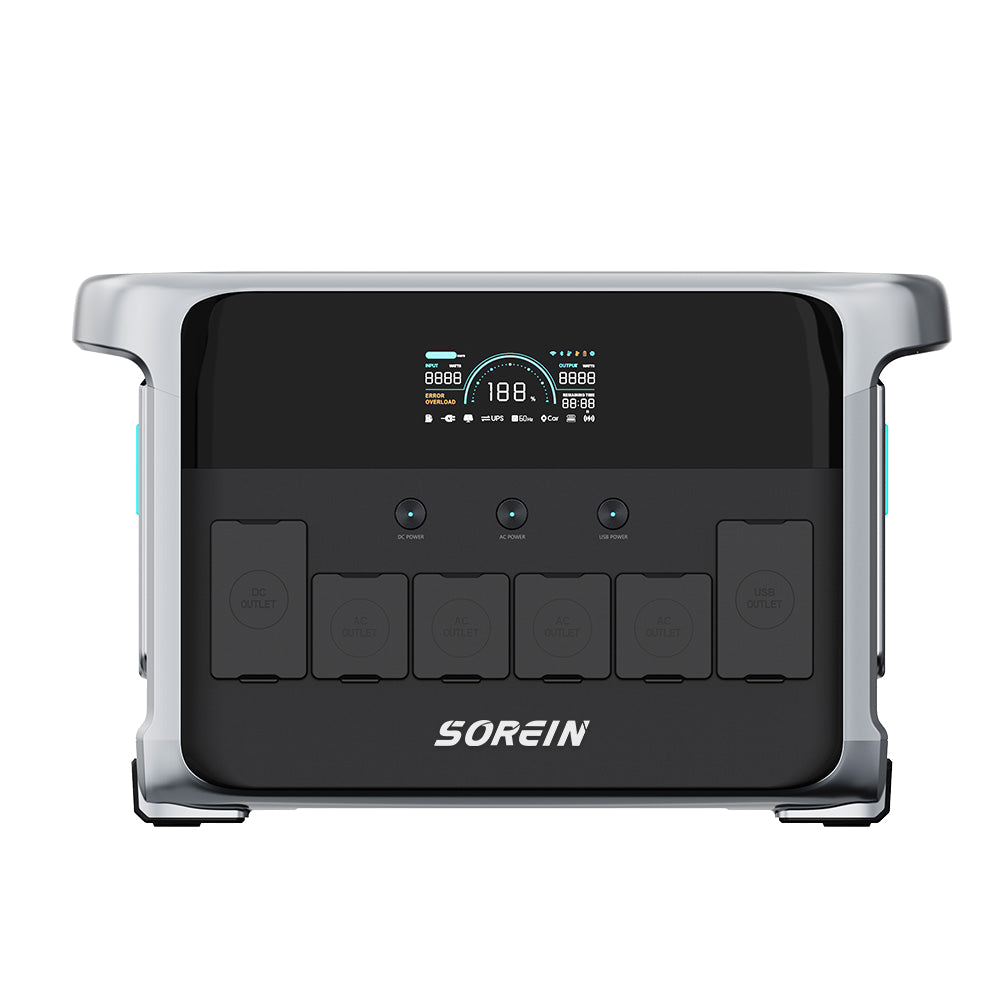
Seven core components decide how a portable power station performs: the battery, inverter, charging controller, output ports, display, enclosure and safety system. Here is what each part does.
01
What is inside a portable power station?
A portable power station typically consists of several key components, each playing an important role in overall performance and user experience. Understanding what each part does makes it much easier to compare models — two stations with the same capacity on the label can behave very differently if their inverters, charging controllers or protection systems differ.
Here is the full anatomy, part by part.
02
1. Battery unit — the energy core
The battery is the single biggest cost and the part that ages first. When you compare models, look past the Wh number and check the chemistry and cycle life — an LFP pack rated for thousands of cycles will outlast a conventional lithium-ion pack several times over.
- Function: Stores electrical energy, determining the power station's capacity (Wh) and usage time.
- Types: Common types include lithium-ion batteries and lithium iron phosphate batteries; the latter is safer and has a longer lifespan.
03
2. Inverter — from DC to usable AC
The inverter's rated wattage sets the ceiling for what you can run at the same time. Motors and compressors also draw a startup surge well above their running watts, so match the peak demand of your toughest appliance — not just its running load — to the inverter.
- Function: Converts direct current (DC) into alternating current (AC), enabling the power station to supply power to various devices.
- Key parameters: Output power and waveform (sine wave or square wave); a high-quality inverter provides stable power, protecting connected devices.

04
3. Charging controller — safe and efficient charging
The charging controller also governs how fast the station refills. AC input wattage and the maximum solar input (often via an MPPT controller) are both limited by this layer, so it directly affects how quickly you are back to full.
- Function: Manages the battery charging process, ensuring safety and efficiency during charging.
- Features: Prevents overcharging, over-discharging and short circuits, extending battery life.
05
4. Output interfaces — ports for every device
Count the ports you actually need before buying: how many AC outlets, whether you need 100W USB-C for a laptop, and whether a 12V car socket or DC5521 outputs matter for your gear. Running out of the right port type is a more common frustration than running out of capacity.
- Function: Provides multiple charging options to connect different types of devices.
- Types: Includes USB-A, USB-C, AC outlets and DC outputs.

06
5. Display screen and control panel
A clear readout of input and output watts turns the station from a black box into a tool you can plan with — you can see exactly what a device draws and estimate remaining runtime instead of guessing.
- Function: Displays real-time information such as battery level, output power and charging status, making it easier to monitor.
- Features: Some high-end models include smart control options that can be managed via an app.

07
6. Enclosure and cooling system
Heat is the main enemy of both lithium cells and power electronics. A well-designed enclosure moves heat out during heavy inverter loads and fast charging, which protects the battery's long-term health as much as it protects the moment.
- Function: Protects internal components and provides good heat dissipation to prevent overheating.
- Materials: Typically made from durable plastic or metal, ensuring durability and impact resistance.
08
7. Safety protection system
The battery management system (BMS) watches cell voltage and temperature in real time and shuts things down before a fault becomes a hazard. This layer is also what makes features like fast charging and UPS-style transfer safe to use indoors.
- Function: Provides overload protection, short circuit protection, temperature protection and other safety features.
- Importance: Ensures the safety of the device and user during operation, preventing accidents.

09
How the parts work together
None of these components acts alone. The battery stores the energy, the charging controller refills it safely, the inverter makes it usable, the ports deliver it, the display tells you what is happening, and the enclosure and protection system keep the whole thing alive for years. When you evaluate your next portable power station, judge the complete structure — not just the capacity number on the front of the box.
Questions
Frequently asked questions
What is the most important component in a portable power station?
The battery unit and the inverter matter most. The battery decides how long you can run devices (capacity in Wh and cycle life), while the inverter decides what you can run at all (rated output in W and output waveform quality).
Which battery chemistry is better, lithium-ion or lithium iron phosphate?
Lithium iron phosphate (LFP) is generally the better choice for power stations. It is more thermally stable, tolerates far more charge cycles (often 3,000 or more), and degrades more slowly than conventional lithium-ion chemistries.
What does the inverter wattage rating mean?
The rated wattage is the continuous AC load the inverter can support. Devices with motors or compressors also need extra startup surge, so check both the running watts and the peak demand of your highest-draw appliance.
Do all portable power stations support solar charging?
Most modern units do, but the solar input limit varies a lot between models. Check the station's maximum solar input in watts and the voltage range before buying panels, and keep the panel output inside the published input range.
Why does the cooling system matter?
The inverter generates heat while converting DC to AC, and heat is the main enemy of lithium cells. A well-designed enclosure with good airflow protects both the electronics and the battery, extending the life of the whole station.