



Sorein P600 Portable Power Station
$399
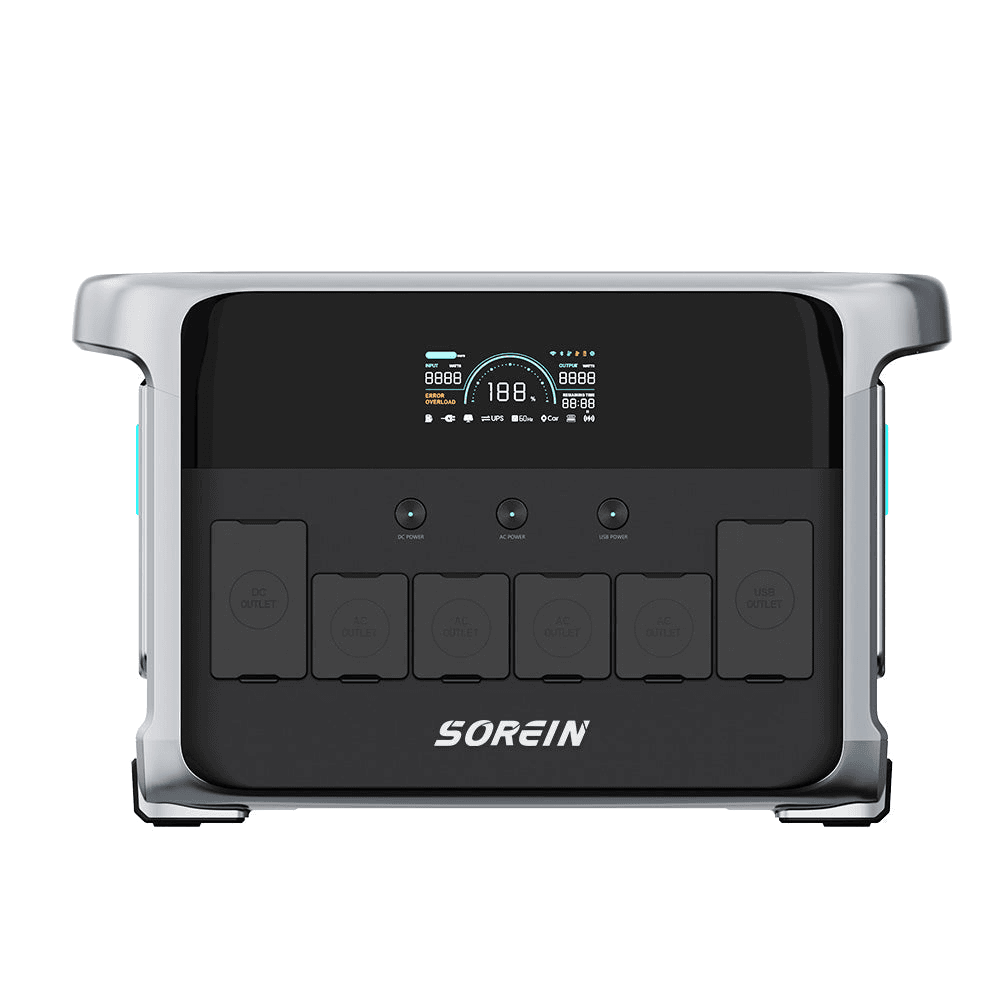
- 481Wh | 600W
- 1,000W peak · 2 AC outlets
- 7.5kg · 100W USB-C PD
From a cabin weekend to an unexpected outage, build a modular portable power station around what you need to run—and how long you need it.
$399
$1,099

$1,699
1 main base · 1 battery · trolley
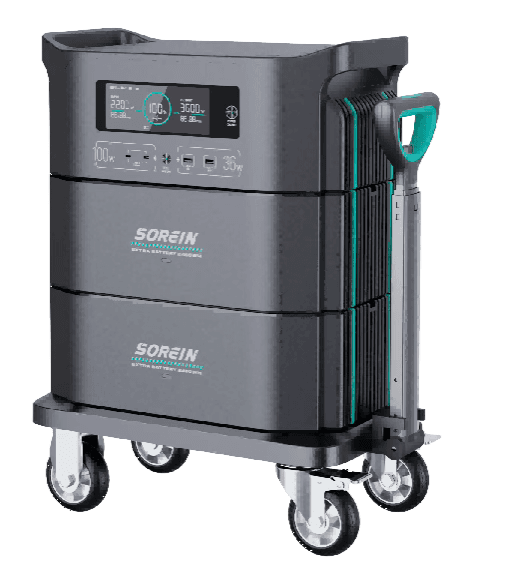
1 main base · 2 batteries · trolley

1 main base · 3 batteries · 1–2 inverters
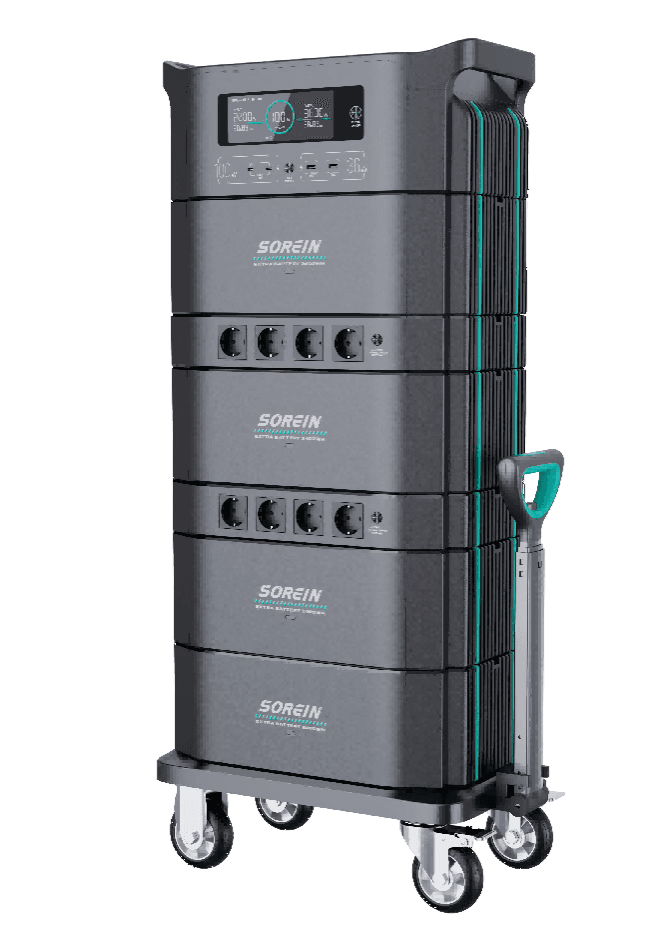
1 main base · 4 batteries · 2–3 inverters
SoreinPower modular portable power stations start with the G Series main base and one 2.4kWh battery. Stack on battery modules for more runtime, add independent inverter modules for more AC output, and keep the complete system mobile on one trolley.
System control, AC charging, solar input, DC ports and the starting 3.3kW AC channel.
Extend runtime one pack at a time without replacing the modules already in the stack.
Each added inverter creates another separately managed AC output channel.
The matched trolley keeps the assembled modules together and ready to reposition.

$399

$599
The maximum load the station can support at one time. Check this first.
The energy stored inside. More watt-hours generally means longer runtime.
How much solar charging the station can accept under suitable conditions.
How many charge cycles are listed before the battery reaches its stated remaining capacity.
Output, capacity, solar charging, cycle life — the numbers that decide which station fits, answered before you buy.
Watts (W) describe how much power a device needs at one moment. Watt-hours (Wh) describe how much energy the station stores. Check output first for compatibility, then capacity for runtime.
Use capacity × 0.85 ÷ device watts as a planning estimate. Real results vary with temperature, inverter losses, battery condition, device cycling and simultaneous loads.
The recommended setup is a panel connected to a compatible power station, which then powers the device. Solar input changes with sun angle, shade, temperature and panel orientation, so the battery buffers that variation.
Start with each tool’s rated and startup wattage. G Series inverter channels are rated at 3,300W each in the US specification; Pro and Ultra configurations add independent channels rather than turning one outlet into an unrestricted combined output.
Pick the situation first. We’ll narrow capacity, output and solar needs from there.
 01 · CPAP and bedside power
P600 / P1200 / P2400
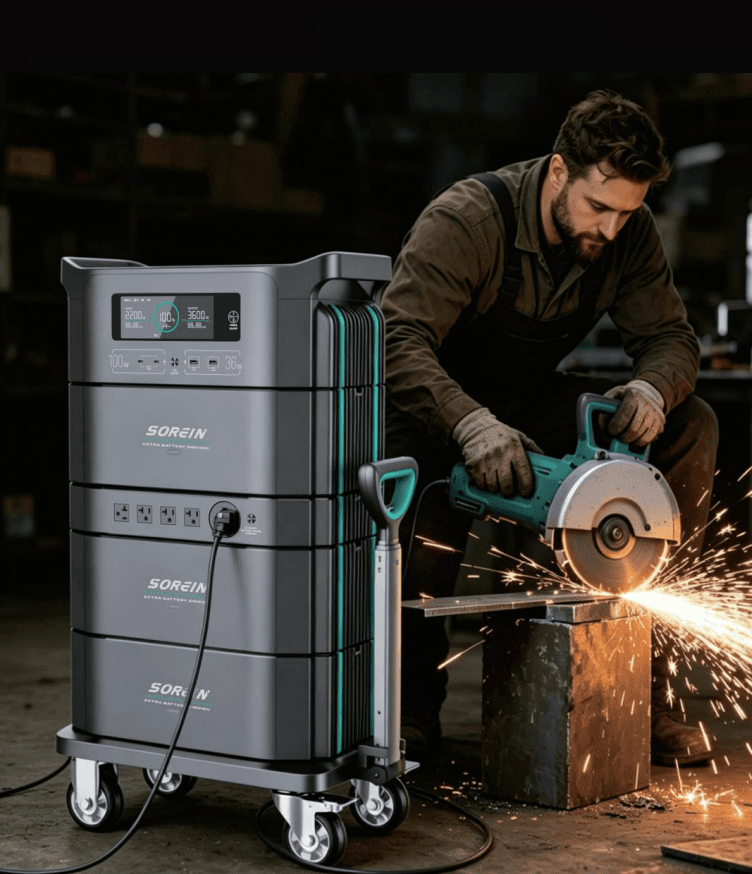 02 · Job-site power
G7200 / G9600
 03 · Emergency backup
P600 / P1200 / P2400 / G2400 / G4800 / G7200 / G9600
 04 · Cabin + solar
G4800 / 400W Solar Panel
 05 · RV travel
G4800 / G7200 / 400W Solar Panel
 06 · Outdoor camping
P600 / P1200 / 200W Solar Panel