
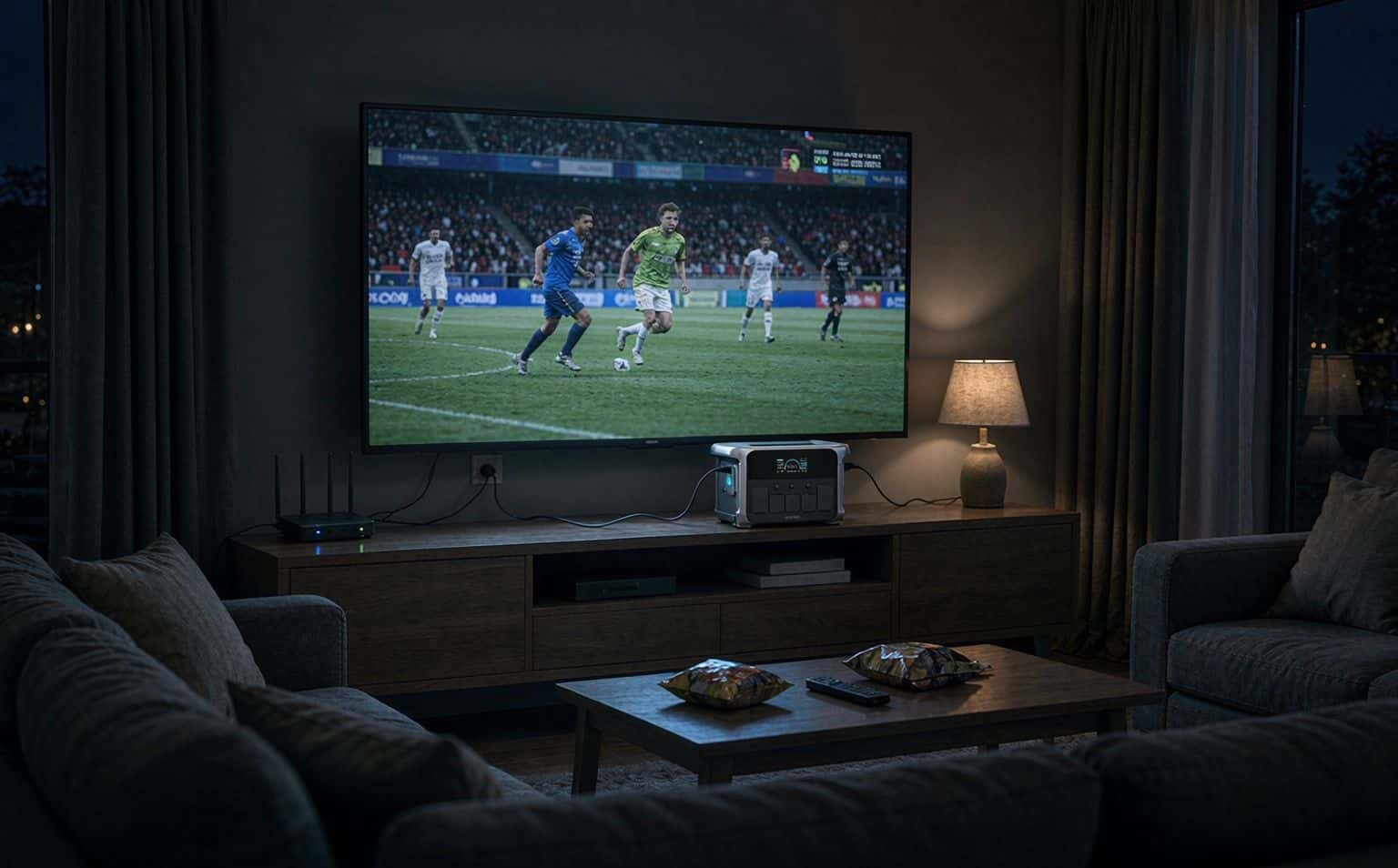
A TV is one of the easiest things to run on battery power. The hard part is cutting through the jargon and the inflated hour claims. Here's what actually matters, in plain English.
How Much Power Does a TV Use?
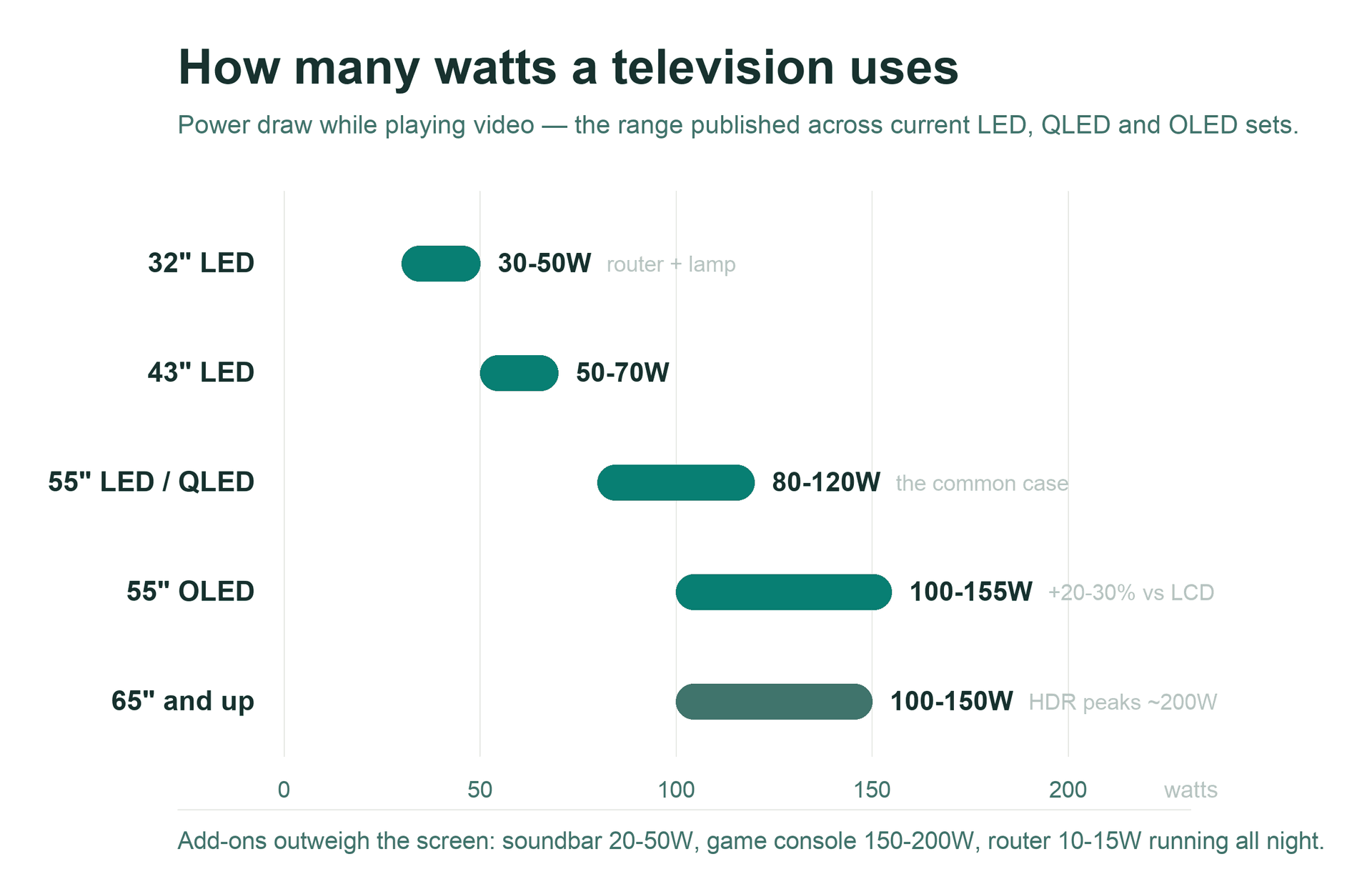
Less than you probably think. A flat-screen TV is one of the cheapest appliances to run on battery — modern sets use far less power than the marketing implies:
Two things can double that. Turning the picture mode to its brightest setting pushes a large TV toward 200W. And the gadgets around the TV matter more than the screen itself: a soundbar adds 20–50W, a game console 150–200W while gaming, and a router 10–15W that runs all night.
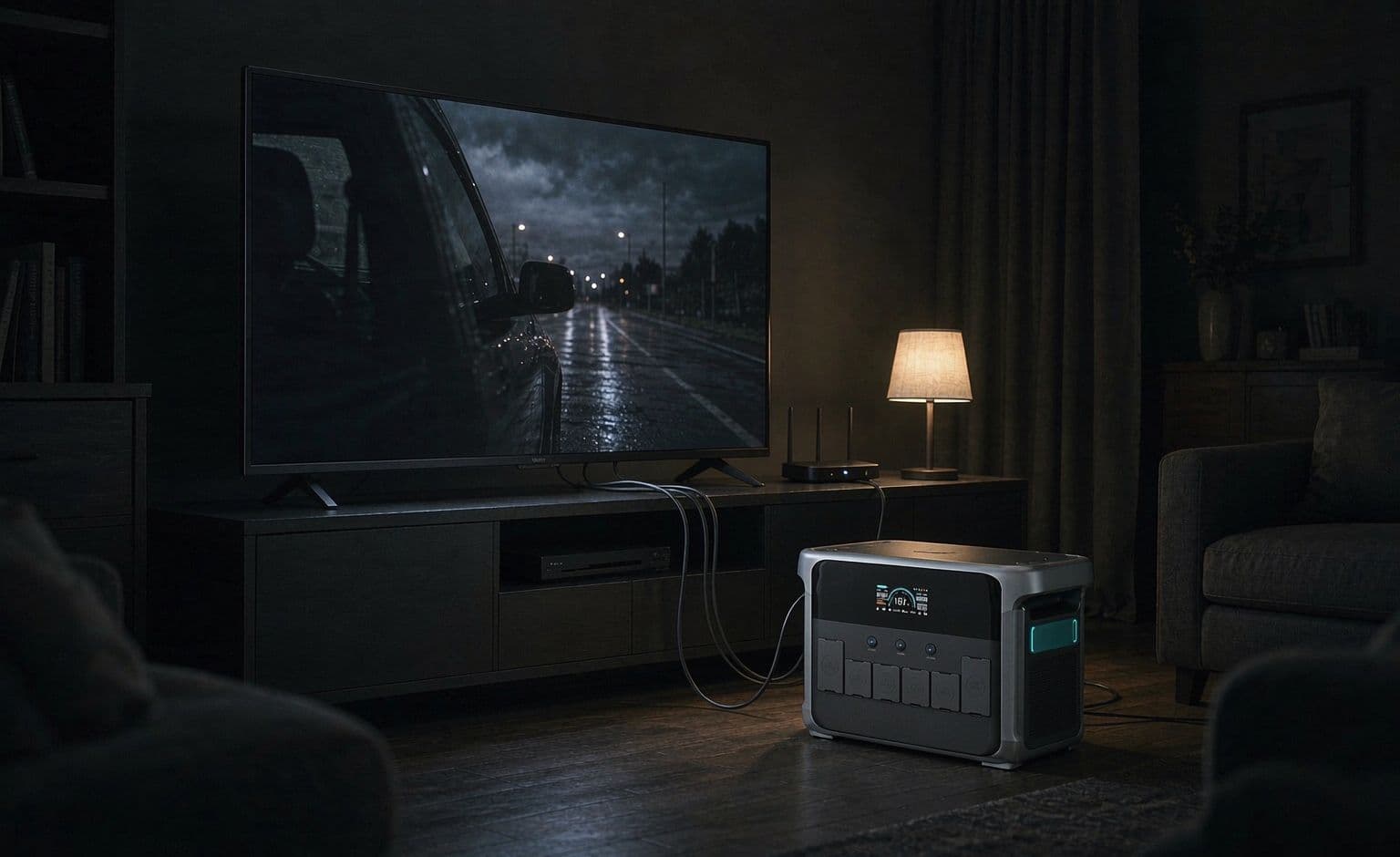
So the real question is never "can it run a TV" — even a small station handles the screen alone. It's "can it run the TV plus everything else in the room, and for how long".
- 32-inch — 30–50W, about two or three LED light bulbs
- 43-inch — 50–70W
- 55-inch — 80–120W while playing content
- 65-inch and up — 100–150W
- OLED screens — run 20–30% higher than a regular screen of the same size
Three Things to Check Before Battery Size
Power that's smooth enough for electronics. TVs are picky about the electricity they receive. Some cheaper stations send choppy, uneven power — the TV may buzz, run hot, or simply refuse to turn on. This is the one thing brands most often hide. In a November 2026 check of nine popular stations, only three say anywhere on the page that their power is smooth and safe for electronics, and at least one budget model — the Westinghouse iGen160s — advertises "3 hours of TV" in a listing that never states "pure sine wave" anywhere on the page. When you compare models, look for the phrase "pure sine wave" in the spec list; that's the industry's shorthand for smooth power, and it's the one piece of jargon worth knowing.
Room to spare. A 65-inch TV at 150W is easy for a 600W station — until you plug in a console too and you're at 350W, close to a small station's limit. Simple rule: add up everything you'll plug in at once, then pick a station rated at least double that number. Extra capacity costs little at purchase time and saves your evening later.
Real battery size. The number on the box isn't fully usable — plan on about 85% of it. Brands quietly disagree on that share, and it's why hour claims vary so much; there's a section on it below.
How Long a Power Station Runs a TV
These numbers assume you can use 85% of the battery's rated size. Take the hours in the row that matches your station, then subtract for anything else you leave plugged in.
Read those numbers as TV-only. A router running alongside a 55-inch set trims the 1,000Wh row from 8.5 hours to about 7.5; a game console brings it back to about three. If your list is longer than a TV and a router, put every device into the power station calculator instead of estimating by feel.

Tool
Portable power station size calculatorOpen| Station size | 32-inch (50W) | 43-inch (60W) | 55-inch (100W) | 65-inch (120W) |
|---|---|---|---|---|
| 500Wh | 8.5 h | 7.1 h | 4.3 h | 3.5 h |
| 1,000Wh | 17 h | 14.2 h | 8.5 h | 7.1 h |
| 2,000Wh | 34 h | 28.3 h | 17 h | 14.2 h |
The Full Comparison
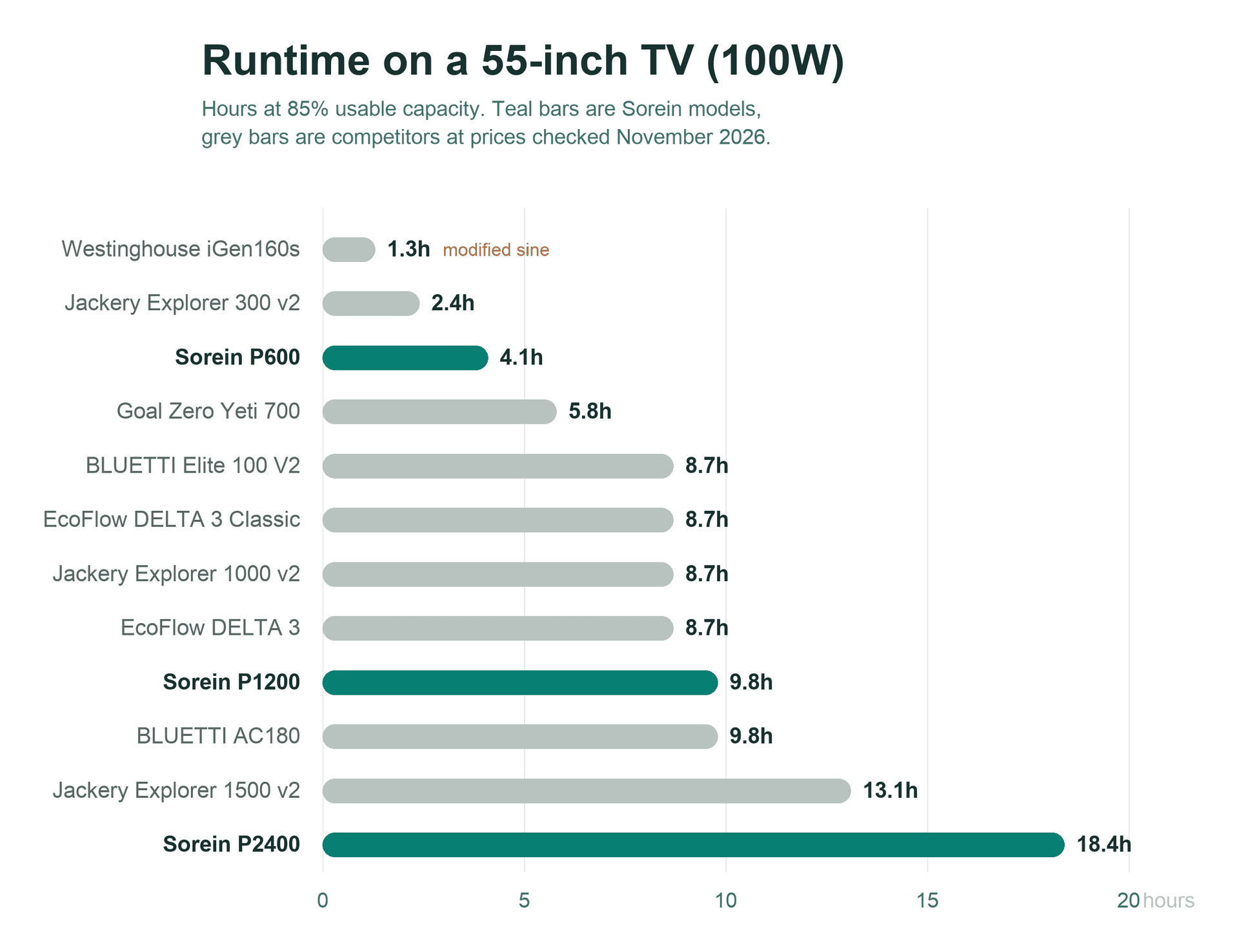
Prices checked on each maker's own store on November 20, 2026 — prices move, so read these as a snapshot and confirm on the linked page before you buy. Hours assume a 55-inch TV running alone, with 85% of each battery usable.
Two rows deserve a closer look. The iGen160s costs about half of the row above it and a third of the 1,000Wh class — and it's the one listing here that promises TV hours without stating "pure sine wave" anywhere on its page, the exact gap the check in the section above tells you to look for. A 155Wh battery is a phone-and-lights battery; treat the TV claim as marketing. Goal Zero's Yeti 700 is the only station here whose published TV figure follows the honest 85% method — a 60-inch LED at 80W for 7.2 hours — which makes its page the best reference for how to do this math. At $700 for 677Wh, though, you're paying for the weather resistance and the five-year warranty rather than battery size; it stores the least energy per dollar in the table. For Sorein's own side-by-side spec sheets, the compare page is the fastest route.
| Station | Battery | Power | 55-inch TV | Price |
|---|---|---|---|---|
| Westinghouse iGen160s | 155Wh | 100W (no "pure sine wave" stated) | 1.3 h | $130 |
| Jackery Explorer 300 v2 | 288Wh | 300W | 2.4 h | $249 |
| P600 | 481Wh | 600W | 4.1 h | $399 |
| Goal Zero Yeti 700 | 677Wh | 600W | 5.8 h | $700 |
| BLUETTI Elite 100 V2 | 1,024Wh | 1,800W | 8.7 h | $499 |
| EcoFlow DELTA 3 Classic | 1,024Wh | 1,800W | 8.7 h | $459 |
| Jackery Explorer 1000 v2 | 1,070Wh | 1,500W | 9.1 h | $559 |
| EcoFlow DELTA 3 | 1,024Wh | 1,800W | 8.7 h | $579 |
| P1200 | 1,152Wh | 1,200W | 9.8 h | $699 |
| BLUETTI AC180 | 1,152Wh | 1,800W | 9.8 h | $549 |
| Jackery Explorer 1500 v2 | 1,536Wh | 2,000W | 13.1 h | $949 |
| P2400 | 2,160Wh | 2,400W | 18.4 h | $1,099 |
Why Two "Same-Size" Batteries Give Different Hours
Here's the trick behind inflated claims. Batteries can't be drained to zero, and each brand assumes a different usable share:
The gap between the honest methods is about 20%: put a 70% claim next to an 85% claim and the smaller battery looks a fifth better than it is. Use one rule for everything — 85% of the rated size, divided by the TV's watts — and the claims become comparable.
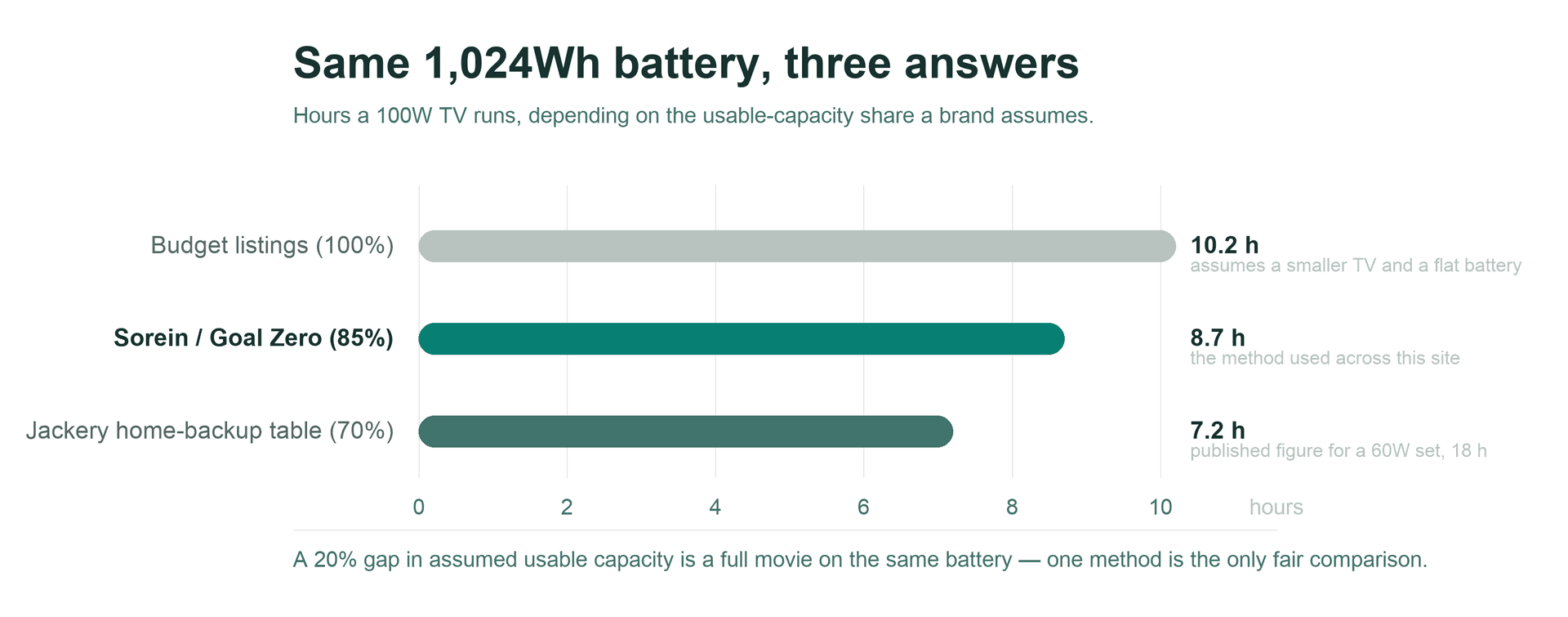
- Goal Zero counts on 85% — its published 7.2 hours for a 60-inch TV matches that math exactly.
- Jackery's home-backup table for the 1500 v2 counts on 70% — the published 18 hours checks out at that share.
- Budget listings quietly assume you can use 100% and a smaller TV. The iGen160s' "3 hours of TV" only works if a modest 52W screen drains the battery completely flat.
The Picks
Every pick below comes straight out of the table above — where another station wins on the numbers, it wins the category.
Best value per watt-hour for the all-night load — P2400
Value depends on what has to run. A TV (100W), a router (12W) and a soundbar (40W) draw about 152W together, and "all night" means eight hours of it — roughly 1,200Wh delivered, which no 1,000Wh-class station can honestly promise. Only two stations in the table clear that bar: Jackery's Explorer 1500 v2 and the P2400. The P2400 stores each watt-hour at $0.51 against the Jackery's $0.62, holds about 500Wh more usable energy, and ends the night with charge to spare: a 65-inch set runs 15 hours alone, or the TV, router, fridge and a few lamps together run roughly seven and a half hours — dinner to past midnight, with the morning news still covered. For the room-by-room outage playbook, the emergency backup scenario guide walks the full load list. And for outages that stretch into days, the G2400 accepts extra battery packs; the sealed P Series does not.
If your ceiling is $500 rather than $1,099, the EcoFlow DELTA 3 Classic and BLUETTI Elite 100 V2 are the honest buys at the 1,000Wh mark — the two cheapest 1,024Wh stations in the table, 8.7 hours on a 55-inch screen, plenty of reserve for a console or soundbar. They cover an evening brilliantly. They do not cover the night: at 152W both fade at about five and a half hours. Between those two, decide on charging speed, app experience and expandability — on hours of TV they are identical.
Jackery's 1500 v2 remains the only large station whose official page tells you straight how many hours a TV runs on it (a 60W set, 18 hours) — worth reading for how clearly it presents the math.
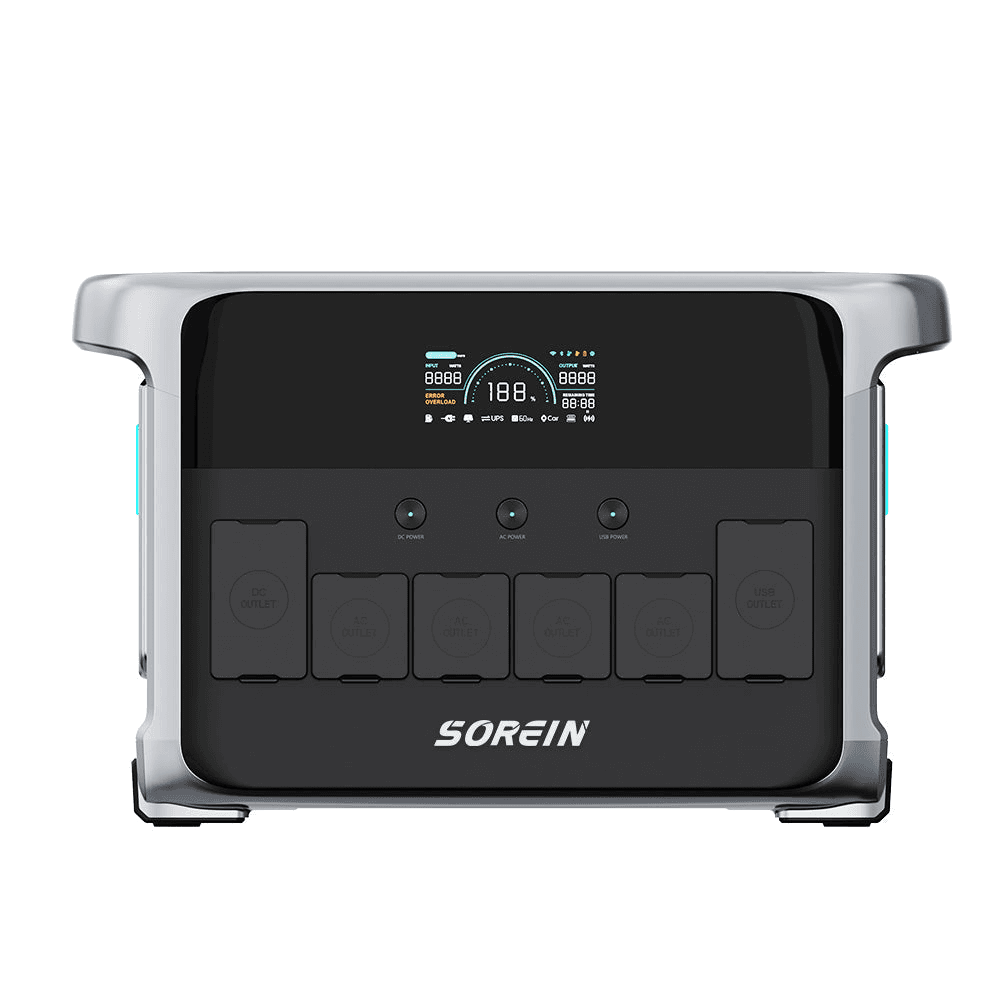
P Series
P2400- 48V LFP battery · 2-hour AC recharge
- Four AC outlets for tools and appliances
Best for two nights of TV and a fridge — P1200
The apartment-outage load list is smaller than the suburban one: a 32-inch set for three hours each evening, the router always on, and the fridge keeping its cool — compressors average closer to 30W than their nameplate suggests. Over two evenings and the night between them, call it sixteen hours, that adds up to roughly 900 watt-hours delivered, and the P1200 covers it with room to spare: 1,152Wh of battery, 979Wh usable at the 85% rule, a 32-inch TV alone for nearly 20 hours or a 55-inch for 9.8. When the power is back, the whole P Series recharges from the wall the same way.
On raw price, the P1200 asks $150 more than BLUETTI's AC180, which holds the same battery class and posts identical 9.8-hour TV figures. That gap buys the more compact chassis and the Sorein ecosystem — if you are building around the brand or prefer the design, this is the pick; if you are shopping purely on the table's numbers, the AC180 at $549 is the stronger buy.
Best for keeping the TV and router alive in an outage — P600
The first hours of an outage are about the screen and the internet, not the whole house. A 55-inch TV (100W) plus router (12W) draws 112W, and the P600 carries that for about three and a half hours on its 481Wh battery — enough for the evening news and the update you actually needed from the web. Drop to a 32-inch set and the same station runs TV-plus-router past six hours. Among the small stations we checked, nothing else combined that much battery with that much power: Jackery's Explorer 300 v2 (288Wh, $249 at time of writing) manages barely two hours at the same load and has nothing left over once the TV is running.
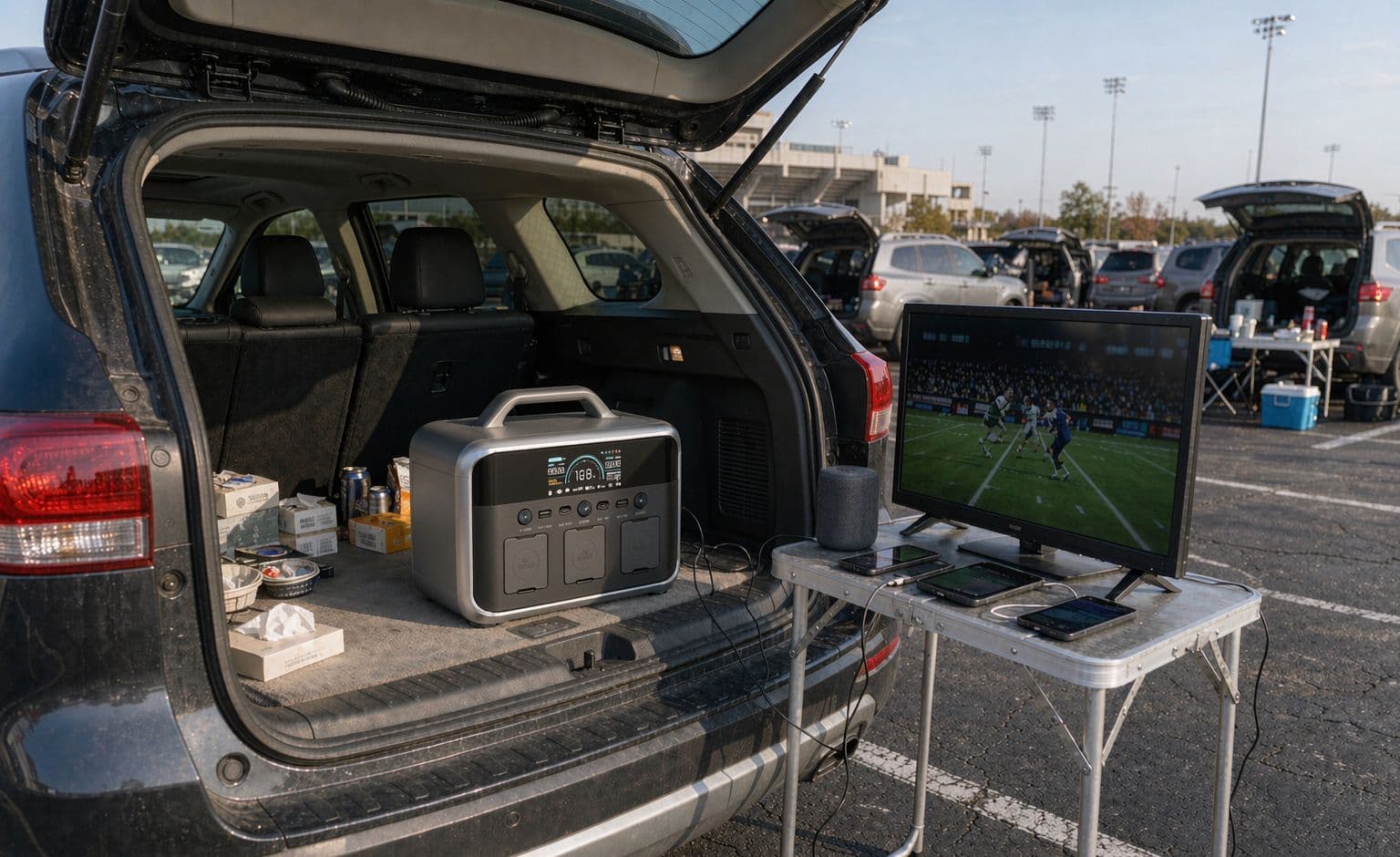
The P600 doubles as the tailgate unit — the photo above is exactly that job — but its real value is being the smallest station in the table that treats the TV as a first-class citizen rather than the only thing it can run.
Pairing the TV with the Rest of the Room
A TV alone rarely justifies a purchase; the room around it decides the size:
- News-and-router kit — 55-inch TV (100W) + router (12W) + phone charging (20W) ≈ 130W. A 1,000Wh-class station covers 6–7 hours.
- Game night — TV (100W) + console (180W) + soundbar (40W) ≈ 320W. Plan 1,000Wh for 2.5 hours, 2,000Wh for a full evening.
- Full outage evening — TV (100W) + router (12W) + fridge turning on and off (about 100W on average) + lights (30W) ≈ 240W. A 2,160Wh station carries this past 7 hours while the fridge keeps its contents cold.
- Starlink users — the dish uses 50–75W around the clock, like a 32-inch TV that never switches off. Add it first and pick one battery size up.
What to Avoid
- Choppy power. The iGen160s advertises TV hours in a listing that never states "pure sine wave" — make of that what you will. If a listing doesn't say "pure sine wave", check before an outage, not during one.
- Trusting the number on the box. The 85%-versus-100% gap means two "1,024Wh" stations can differ by a full movie of TV time. Compare hours using one fixed method.
- Buying the smallest power rating for a big setup. A small unit runs a 65-inch TV alone, but add a console and it's maxed out. Room to spare is cheap at purchase time and expensive at 9 p.m. during an outage.
- Leaving it switched on. A station sips 10–20W for itself even when nothing is plugged in. Over a three-hour film that's enough to matter on a small battery. Turn the station off when the screen turns off.
Questions
Frequently asked questions
Can a portable power station run a TV?
Yes — a TV is one of the lightest things you can plug into one. A modern 32-inch set uses about as much power as a couple of light bulbs, and even a 65-inch model stays under 150W, so any station rated 300W or more runs the screen itself. The real questions are how long the battery lasts once you add a soundbar, game console or router — and whether the power it sends is smooth enough for electronics.
How long will a 1,000Wh power station run a 55-inch TV?
About 8.5 hours. No battery can be drained to the very last drop, so count on roughly 850 usable watt-hours and divide by the TV's 100W. Add a router and a soundbar and it drops to about five and a half hours. Brands that assume you can use every drop advertise closer to ten hours for the same battery — that's why identical capacities come with wildly different hour claims.
Do I need to worry about power quality for a TV?
You don't need an engineering lesson, but you do need smooth power. TVs can buzz, run hot, or refuse to turn on when a station sends choppy, uneven power. When comparing models, look for the phrase "pure sine wave" in the spec list — that's the industry's shorthand for smooth, appliance-safe power. At least one popular budget model advertises TV hours in its listing without stating "pure sine wave" anywhere on the page.
What size power station for a TV and a game console?
A game console uses about twice the power of the TV next to it — together expect around 300W. A 1,000Wh-class station runs that combination for about two and a half hours; a 2,000Wh-class station covers a full evening and still has charge left for the router and a lamp.
Why does one brand claim longer TV runtime than another with the same battery size?
They count differently. Batteries can't be drained flat, and each brand assumes a different usable share — some are honest about it, some quietly assume you can use 100%. Use one simple rule for every station: take 85% of the battery's rated size and divide by your TV's watts. Then the hour claims become comparable.